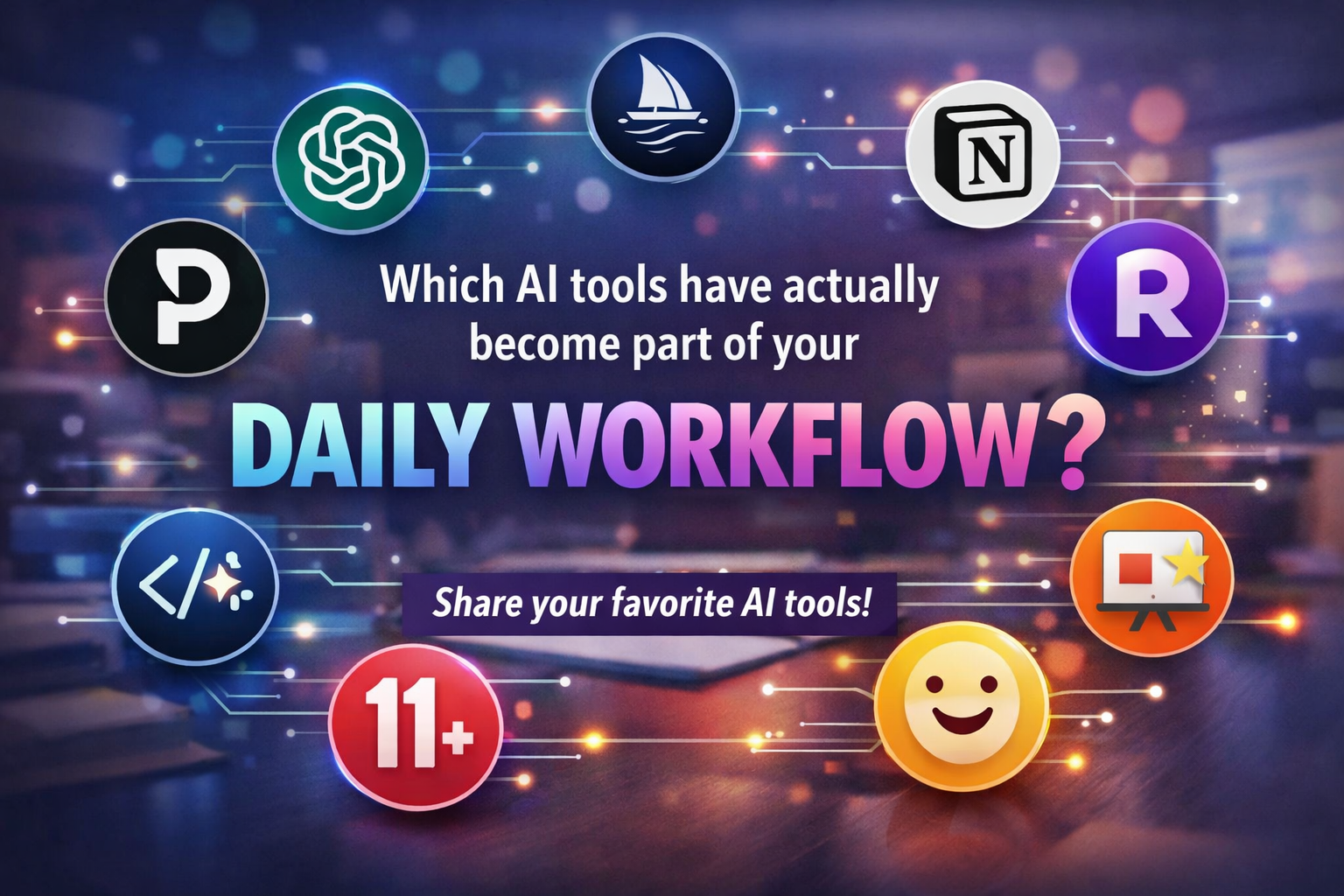
Which AI tools have actually become part of your daily workflow?
The Shift from Novelty to Necessity
Remember when we first started playing with AI? It felt like a collection of party tricks—generating a silly image or writing a poem about a toaster. But the landscape has shifted. We are now living in the Integration Era, where the most successful tools are those that have disappeared into the background of our daily routines. These aren't just gadgets; they are the new infrastructure of our professional lives.
1. The Death of the Blank Page
Writer's block is becoming a relic of the past. For many, the morning starts by opening Claude to brainstorm structural outlines or refine complex ideas. When the focus shifts to professional documentation, Notion AI has become a staple for summarizing meeting notes and extracting action items directly within a workspace. For those specifically focused on grammar and tone, Grammarly remains the silent guardian of our emails and reports.
2. Research and Information Retrieval
The way we find information has fundamentally changed. Instead of sifting through pages of SEO-optimized search results, many of us now turn to Perplexity for cited, concise answers to complex questions. It has replaced the traditional search engine for deep-dive research sessions. Similarly, when dealing with dense academic papers or long contracts, ChatPDF allows users to converse with documents, turning hours of reading into minutes of targeted inquiry.
3. Visualizing Ideas Instantly
In the past, creating a presentation or a visual mockup required a design degree or a lot of patience. Now, tools like Gamma AI allow us to generate beautiful, interactive slide decks from a single prompt. For quick social media graphics or professional-grade layouts, Canva has integrated so many AI features that it feels like having a junior designer on speed dial.
4. Managing the Cognitive Load
Perhaps the most significant impact of AI is in managing our most precious resource: time. Motion has become a daily driver for many, using AI to automatically rebuild schedules when priorities shift. Meanwhile, Zapier acts as the invisible glue, connecting all these tools so that data flows seamlessly without manual entry. Which of these have you woven into your digital nervous system?